
AutoDock AI
A rotary parking machine for Kozhikode — twenty bays on the footprint of one, with EV charging built into the stack.
The parking we never built
For forty years Kozhikode added vehicles and never added the ground to keep them on. Parking was left to the kerb, the verge and whatever plot stood vacant — and that is the shortage the city pays for every day.
The charging we have not started
The fleet turns electric this decade, and kerbside charging claims the ground twice over — a bay for the vehicle and a machine standing beside it. Build it the old way and the city repeats the mistake at greater cost.
How It Works
Twenty-five seconds, driver never leaves the ground: the pallet locks, the loop turns, and the car is carried into the stack.
A fifty-car plot parks five hundred
One tower stands on 35 sq metre — 377 sq ft, 0.87 cent — eleven storeys holding twenty cars in that footprint. Every bay is a charging bay, so charging costs the site no extra land and no extra dwell.
Twenty Bays, One Footprint
The stack does the standing, not the plot. Twenty pallets on a continuous loop, eleven storeys tall, return ten times the parking from the same ground.
The Tower as Frontage
Eleven storeys of façade come with the structure. Operator livery, a civic information panel or a leased advertising face — the skin is revenue the kerb never had.
Be first when a tower lands in your city
Pilots launch in 2026, starting in Kozhikode. Tell us where you charge today and we will tell you when bookings open near you — reserve a bay from your phone and charge while you park.

Why the City Needs This Work
A centre that keeps moving
Kozhikode's commercial centre has shifted three times in a century — from the beach, to Mananchira, to Mavoor Road, and now outward to the Thondayad bypass belt. Each move added a congestion core, and none of them arrived with a structured parking deck behind it.
Three termini on one road
The KSRTC stand, the Mofussil stand and the New Bus Station all open onto Indira Gandhi Road, with the suburban private buses working out of Palayam. Kerb parking absorbs the overflow, and on the arterials a full lane stands still through the peak.
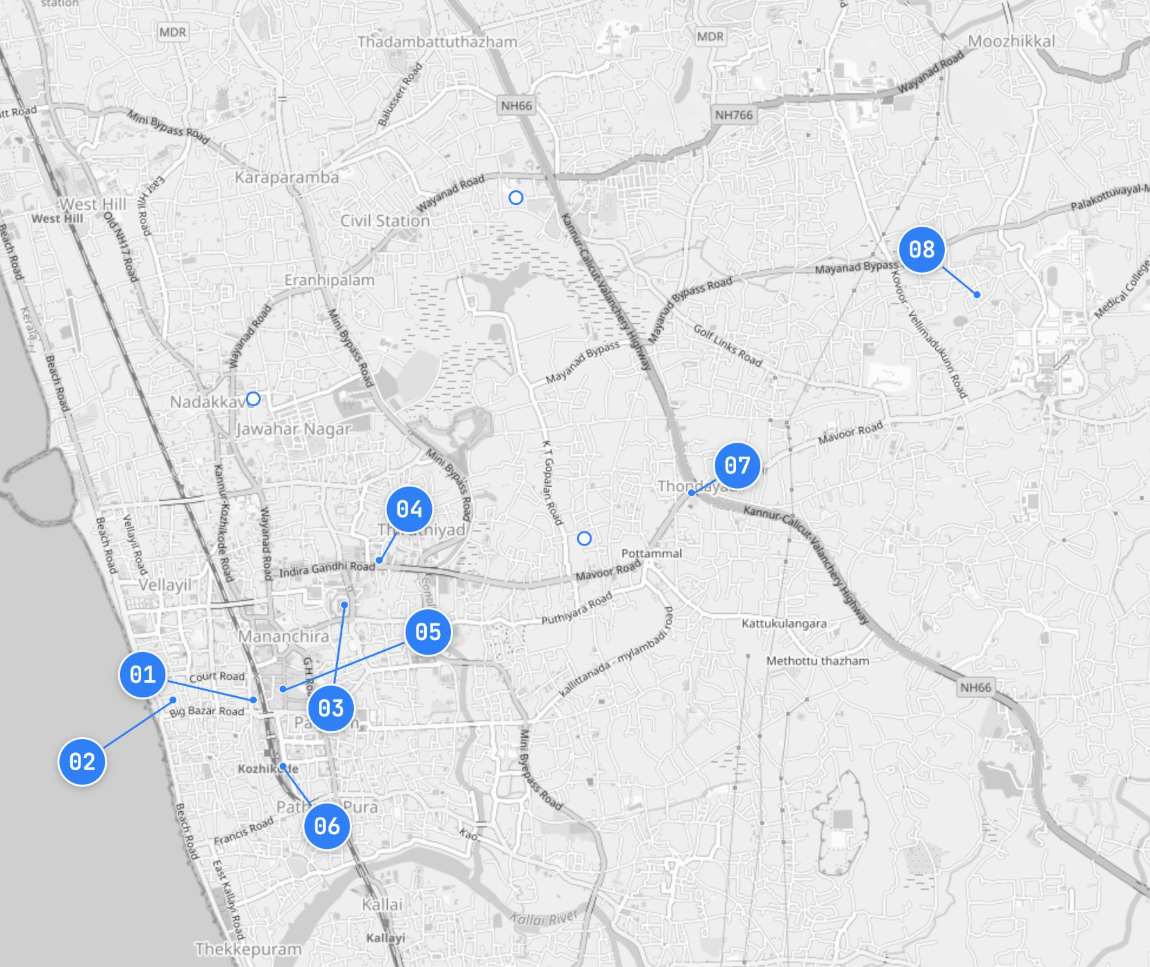
Kozhikode
Six lakh people on a six-kilometre shoreline. Eight priority sites inside it, and four more behind them.
Eight Priority Sites
- 01SM Street
- 02Kozhikode Beach & promenade
- 03Mavoor Road / Indira Gandhi Road
- 04Arayidathupalam Junction
- 05Mananchira Square
- 06Kozhikode Railway Station
- 07Thondayad Junction
- 08Medical College Road
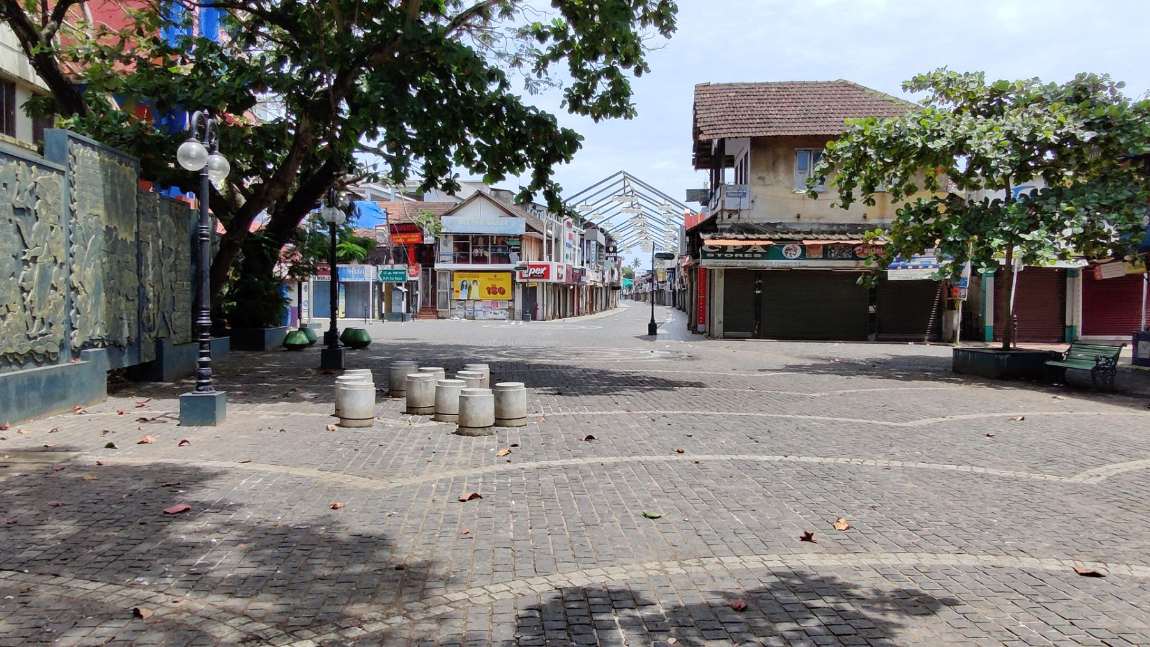
SM Street
Half a kilometre of pedestrian retail with no off-street parking of its own. Every shopper's vehicle is displaced onto the feeder lanes behind — one tower off Kuttichira Road serves the whole spine.
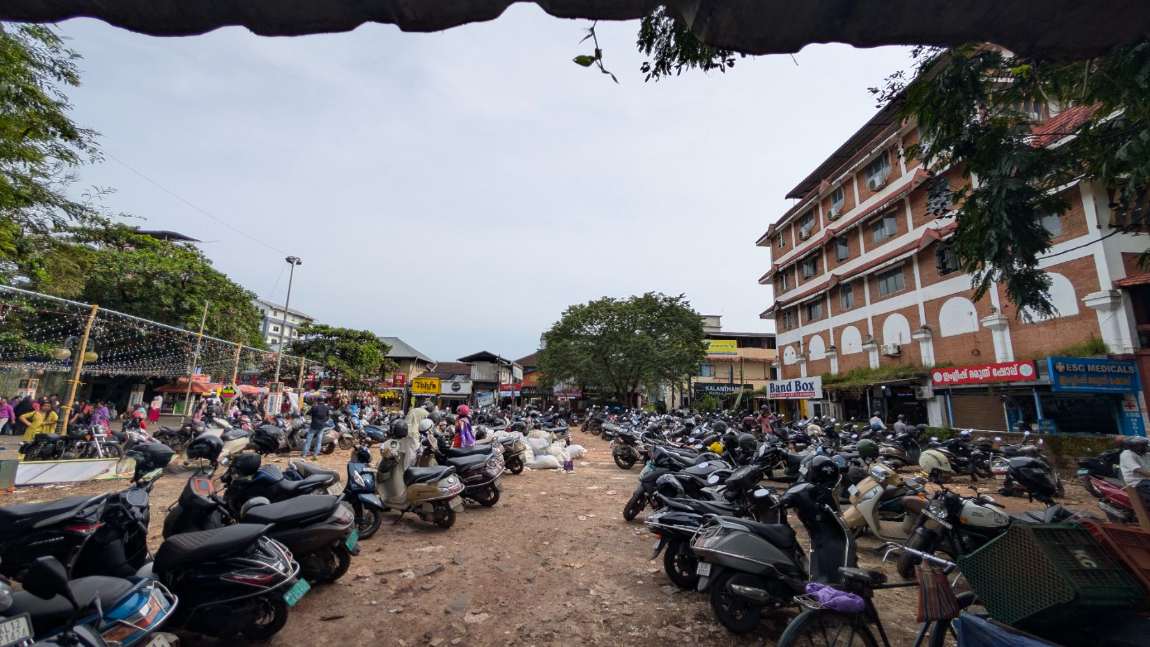
The market's forecourt is a scooter yard
Bare earth, no marking, no drainage — the yard serving Kozhikode's busiest retail street is filled end to end with two-wheelers, with refuse heaped in the middle. Cars never reach it; they stop on the approach roads instead.
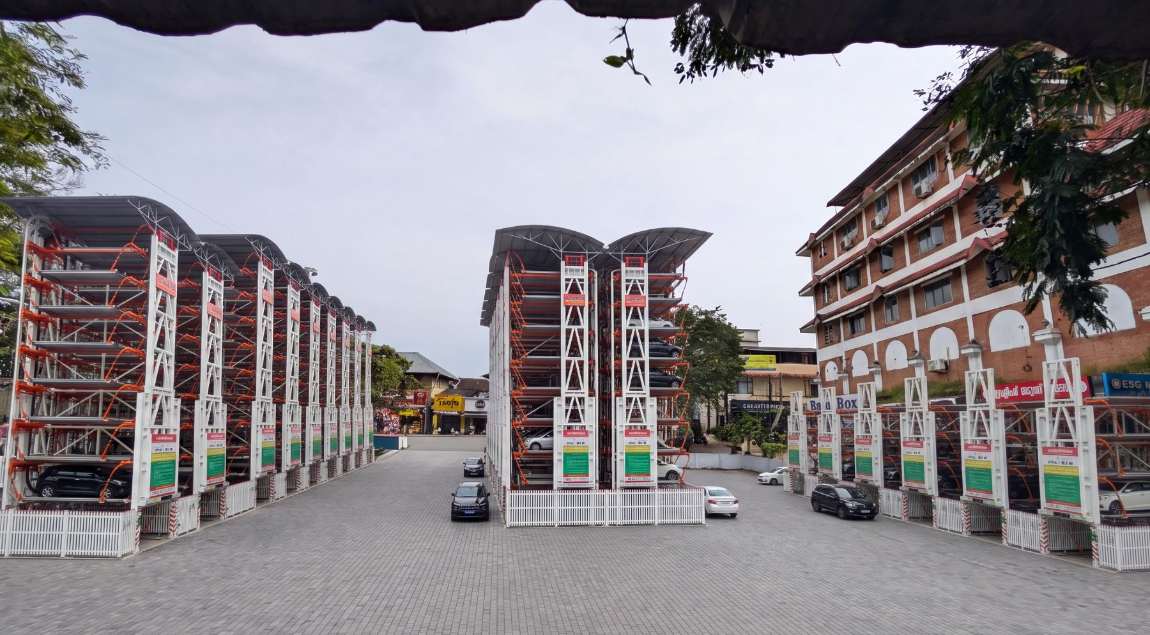
A forecourt the market can actually use
Towers down both flanks, a paved court between them wide enough for cars to turn, and the two-wheelers stacked rather than sprawled. The refuse and the mud are gone; the yard reads as an address instead of an overflow.
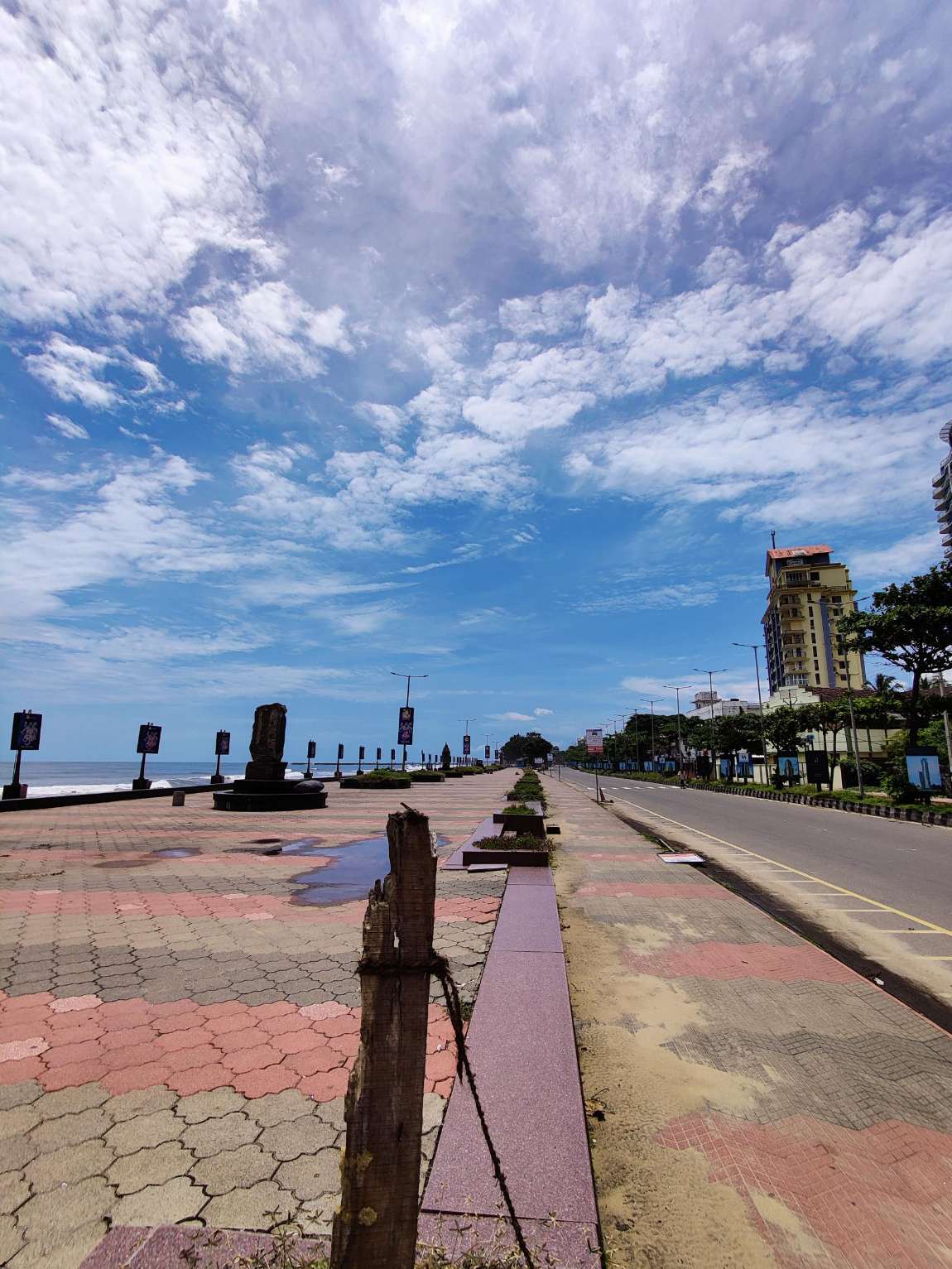
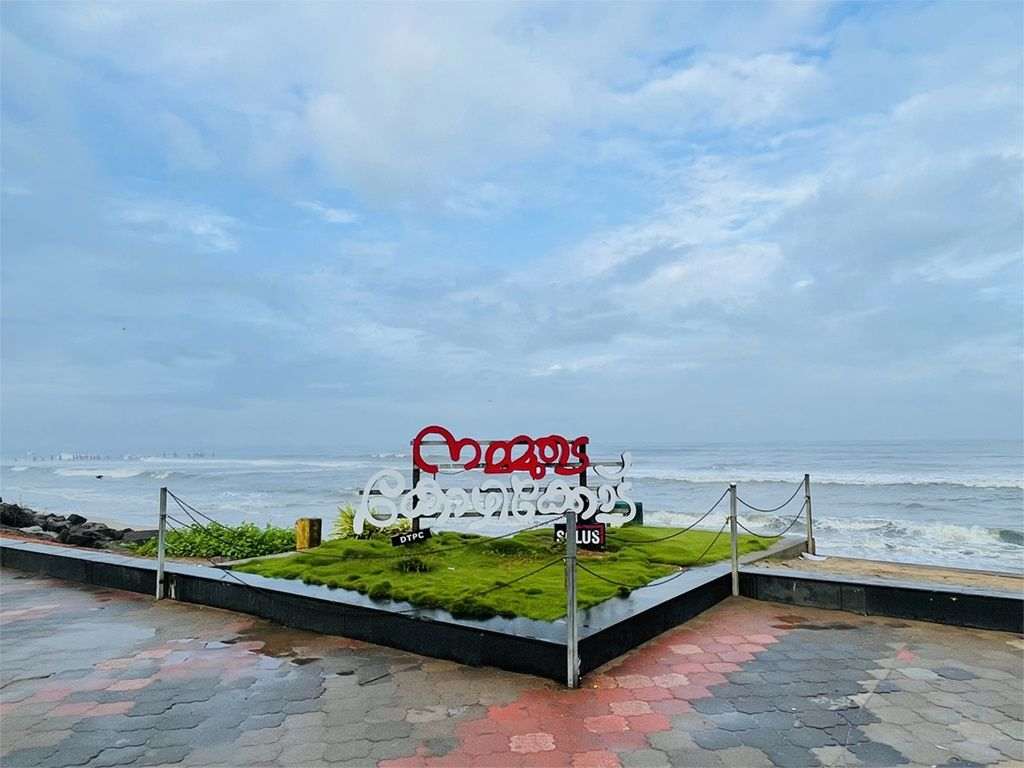
Kozhikode Beach
The promenade draws the city every evening and takes the whole weekend load, with not one structured parking deck on the waterfront. The overflow stands on Beach Road and the lanes behind it.
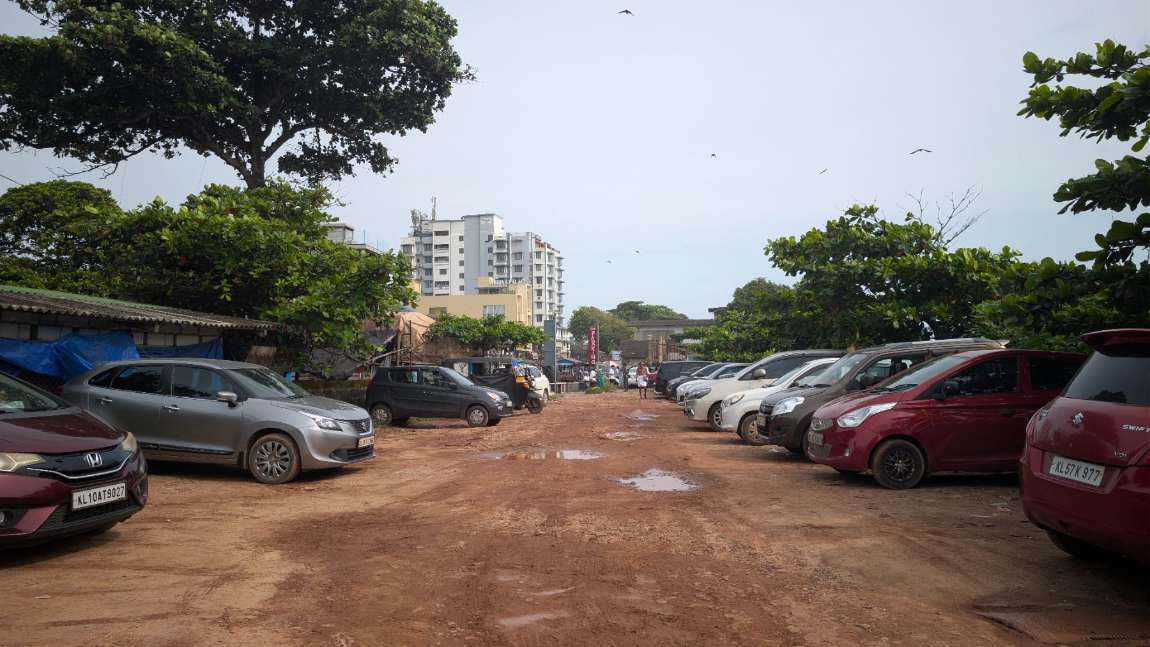
The waterfront's parking is a field
Bare laterite, no marking, no drainage. Two ragged rows against the trees, the centre given over to turning, and the whole of it unusable in heavy rain — this is what a prime seafront plot earns today.
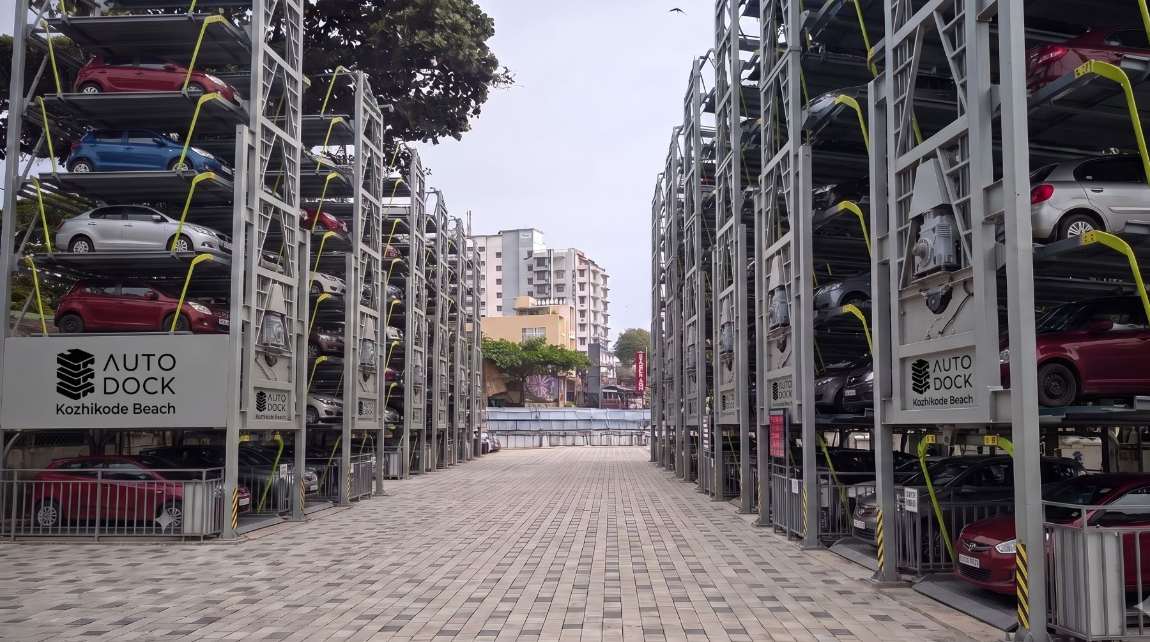
Same plot, ten times the cars
Rotary towers along both edges, a paved aisle down the middle that works through the monsoon, and a single attended entry point. Not one metre of extra land — the same boundary, built upward, with EV charging available at the bay.
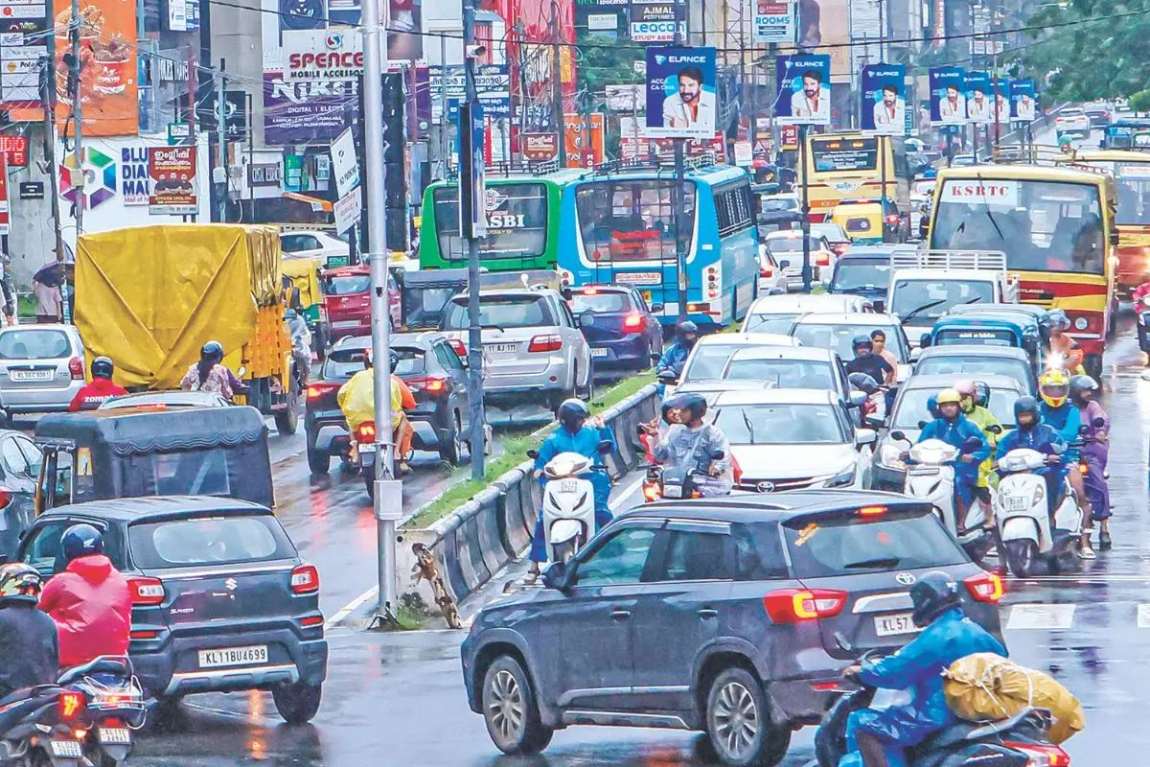
Mavoor Road
Three bus termini open onto one arterial high street. Both carriageways carry kerb parking, so the running lanes are whatever the parked vehicles leave behind.
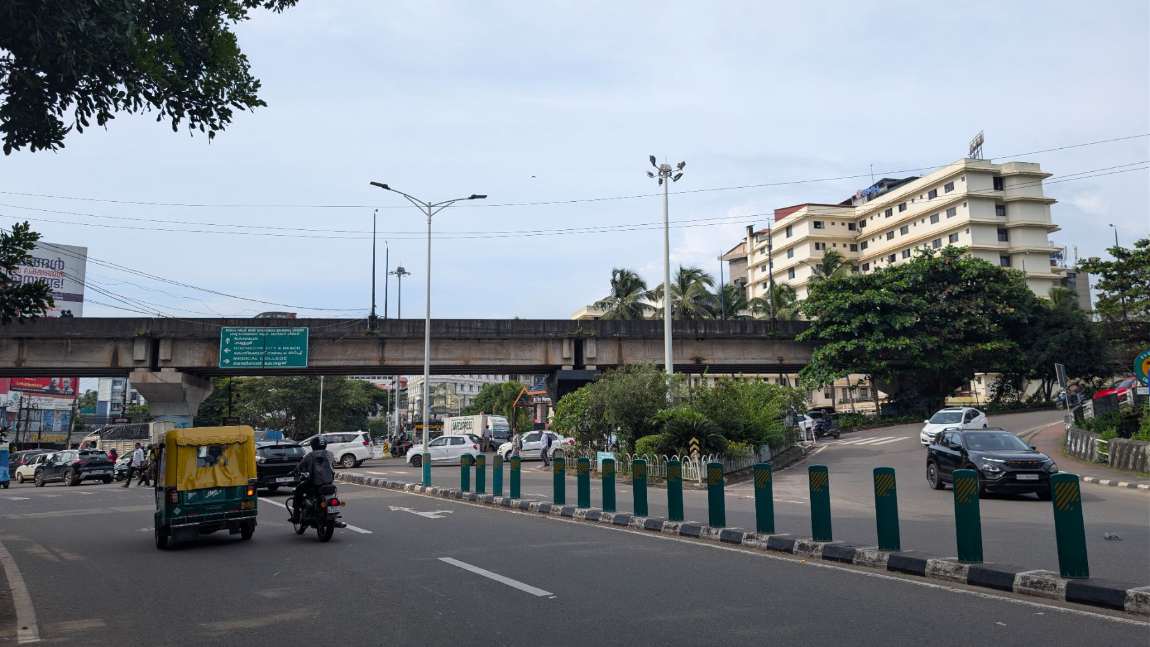
The junction with nowhere to stop
Mavoor Road, the bypass and the city road meet under one flyover. The kerb that should absorb stopping vehicles has been bollarded off to protect the movement — so hospital and office visitors leave cars on the side roads and the rest keep circling.
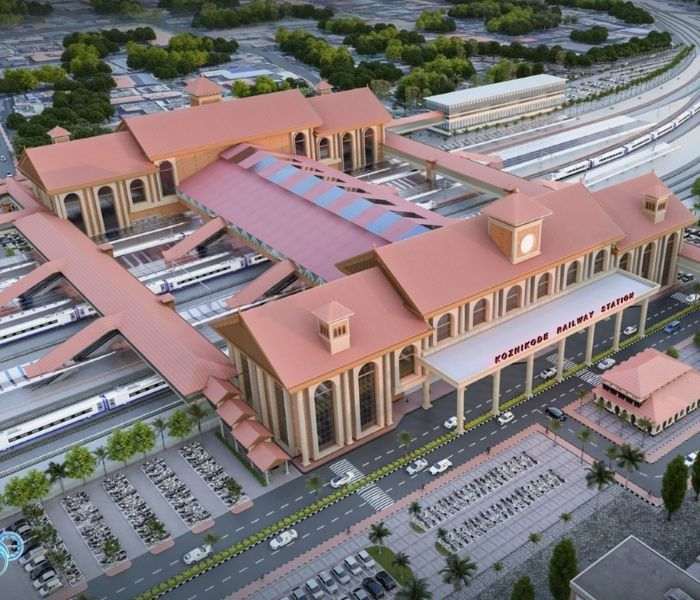
A new station, ringed by flat parking
The redevelopment gives the city a frontage worth having — then lays its vehicles flat around it. Three surface lots and a two-wheeler yard occupy the most valuable ground in Kozhikode. Stack the same vehicles along the edge and the forecourt comes back.
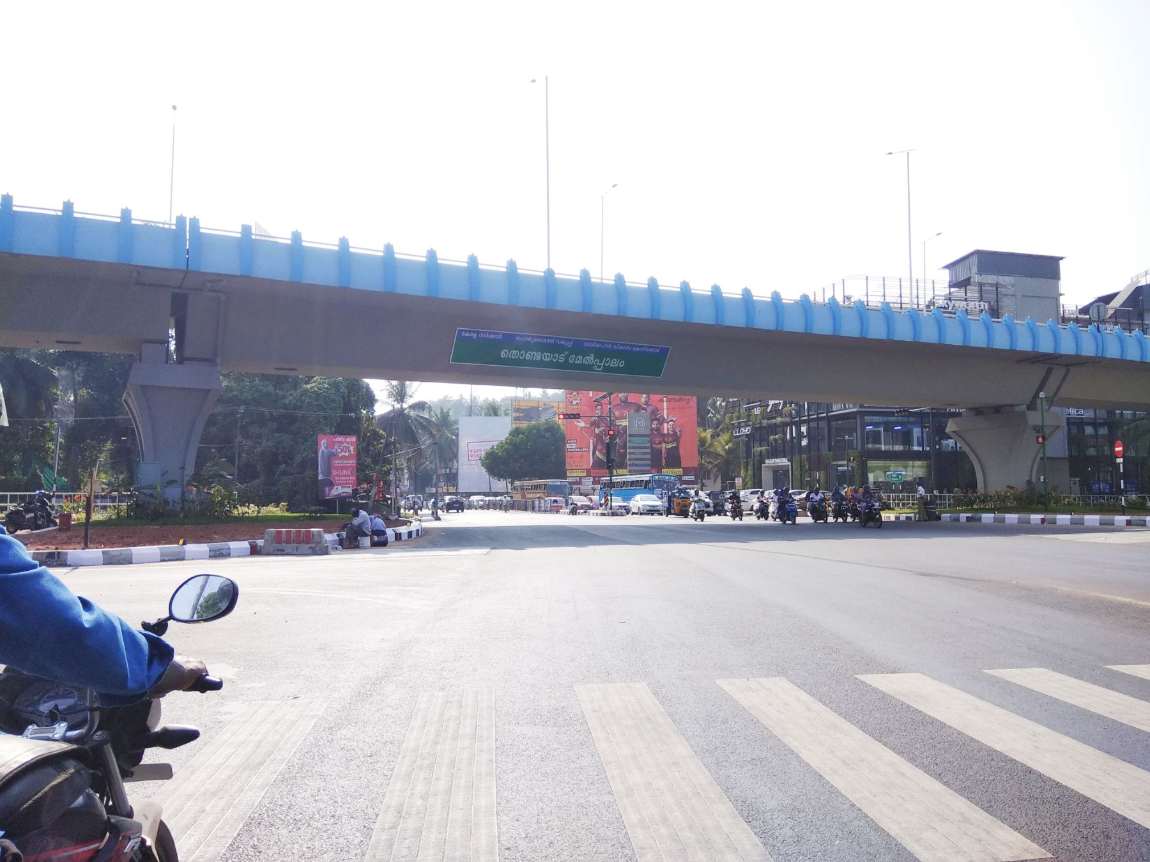
New flyover, no parking under it
The city's fastest-growing commercial frontage — malls, showrooms and offices on every corner — and all of it parks on the service road. The ground under and beside the span is public, cleared and already built to carry load.
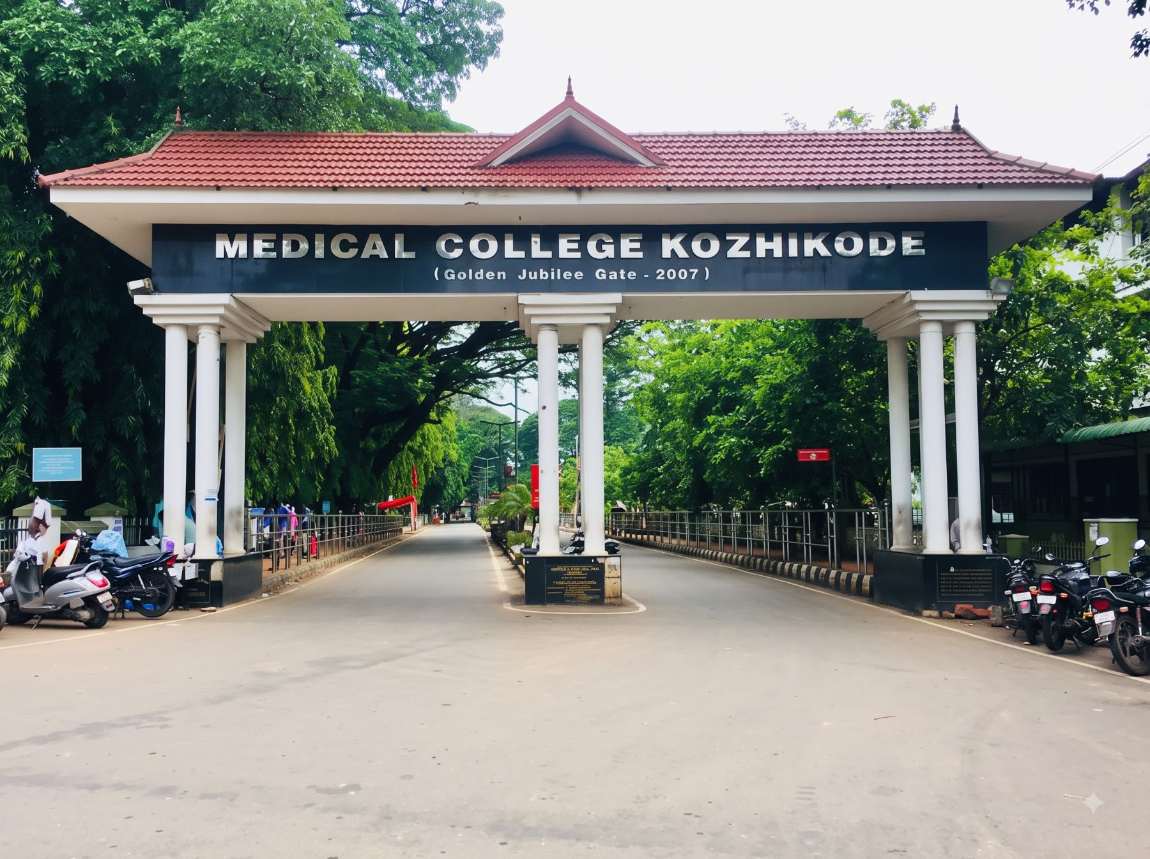
The longest dwell in the city
Attenders and visitors leave a vehicle for hours, not minutes, and the approach road takes it on both verges — two-wheelers nose in against the railings, cars on the shoulder past the gate. The institution loses its frontage to overflow.
Four More Sites
Kottooli & Pottammal
Two junctions 650 m apart on the eastern approach to Mavoor Road.
Palayam
Suburban private-bus terminus sharing its approach with the vegetable market.
Nadakkavu
Schools and offices on the northern arterial, peaking twice daily.
Malaparamba
Bypass-side residential growth ahead of its road capacity.
Infrastructure for a
Smart Kozhikode
Parking, charging and land yield solved as one piece of civic infrastructure.